NEWSNORD ORIGINAL
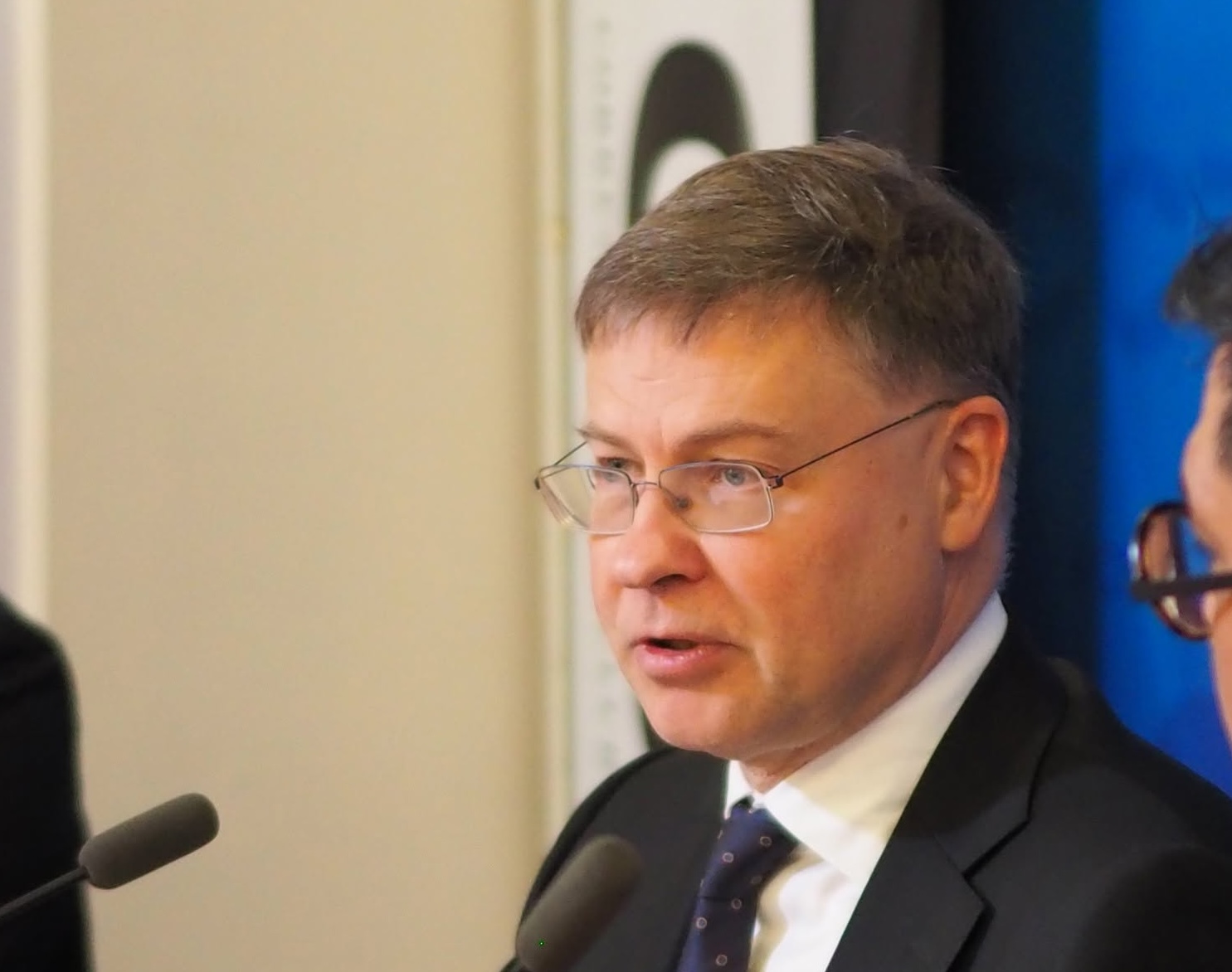
European Commissioner for Economy and Productivity Valdis Dombrovskis said that the European Union stands in solidarity with the International Criminal Court (ICC) and is seeking ways to shield the court and its members from “unjustified US sanctions”.
Dombrovskis made these remarks while answering questions at the Foreign Correspondents’ Club of Thailand in Bangkok on October 13, 2026. He was in the city to participate in the 2026 IMF–World Bank Group Annual Meetings.
US Sanctions Target the ICC
His remarks came four days after the United States imposed sanctions on the ICC as an institution on October 9, 2026. The US Treasury added the court to its sanctions list, extending measures that, according to the ICC, had already targeted 13 of its judges and prosecutors. Washington said the latest action was intended to defend US sovereignty and protect American citizens from the court. A 180-day licence temporarily permits certain activities needed to maintain the court’s operations.
The sanctions campaign rests on an executive order signed by President Donald Trump on February 6, 2025, which named ICC prosecutor Karim Khan as its initial target. The order cited the court’s investigations concerning US personnel and its arrest warrants for Israeli Prime Minister Benjamin Netanyahu and former Defence Minister Yoav Gallant.
The Trump administration characterised these actions as illegitimate and argued that the court lacked jurisdiction over the United States and Israel, neither of which is a party to the Rome Statute that established the ICC.
The sanctions were announced hours after former ICC judge Navi Pillay was named the winner of the 2026 Nobel Peace Prize, although Washington did not cite the award as a reason for its action.
Europe Explores Protection for the ICC
The EU had already called on Washington to reverse the sanctions. In a statement issued on October 10, 2026, High Representative Kaja Kallas, speaking on behalf of the EU, reaffirmed support for the ICC’s independence and said attacks or threats against the court, its personnel and those cooperating with it were unacceptable. The statement pledged continued support for their protection and expressed readiness to take the measures necessary to ensure that the court could operate effectively. It also emphasised diplomacy as a means of securing the sanctions’ reversal.
Belgium and the Netherlands subsequently raised the sanctions at the EU Foreign Affairs Council on October 12. The Netherlands had earlier asked the European Commission to prepare the use of the EU’s blocking statute, a legal instrument designed to protect European companies and individuals from specified foreign laws applied beyond their borders. Neither the October 10 statement nor the published account of the October 12 meeting announced an extension of the statute to cover the ICC sanctions.
Dombrovskis did not identify a specific shielding mechanism or provide a timetable, saying the EU was still considering its response.
Russian Threats and EU Support for Ukraine
The EU Commissioner, who previously served as Prime Minister of Latvia, also warned of the threat posed by Russia. “We clearly see Russia as a threat,” Dombrovskis said, condemning its “brutal and illegal war” in Ukraine and its deliberate targeting of civilians and civilian infrastructure.
He said Russia was openly threatening other countries, including the Baltic states, and talking about invading EU and NATO countries. This required greater military preparedness, he said, identifying economic competitiveness and security and defence as the EU’s two overarching priorities.
He also pointed to Russian hybrid attacks, including drone incursions, sabotage, interference in democratic processes, disinformation and cyberattacks, affecting countries bordering Russia and others across Europe.
Dombrovskis reaffirmed the EU’s solidarity with Ukraine and its continued financial, economic and military support. He said the €90 billion Ukraine support loan programme aimed to cover around two-thirds of the country’s financing needs for 2026 and 2027, with discussions at the IMF–World Bank meetings focused on encouraging international partners to help cover the remaining third.
He added that EU accession negotiations offered Ukraine a clear perspective that its future lay in the European Union.