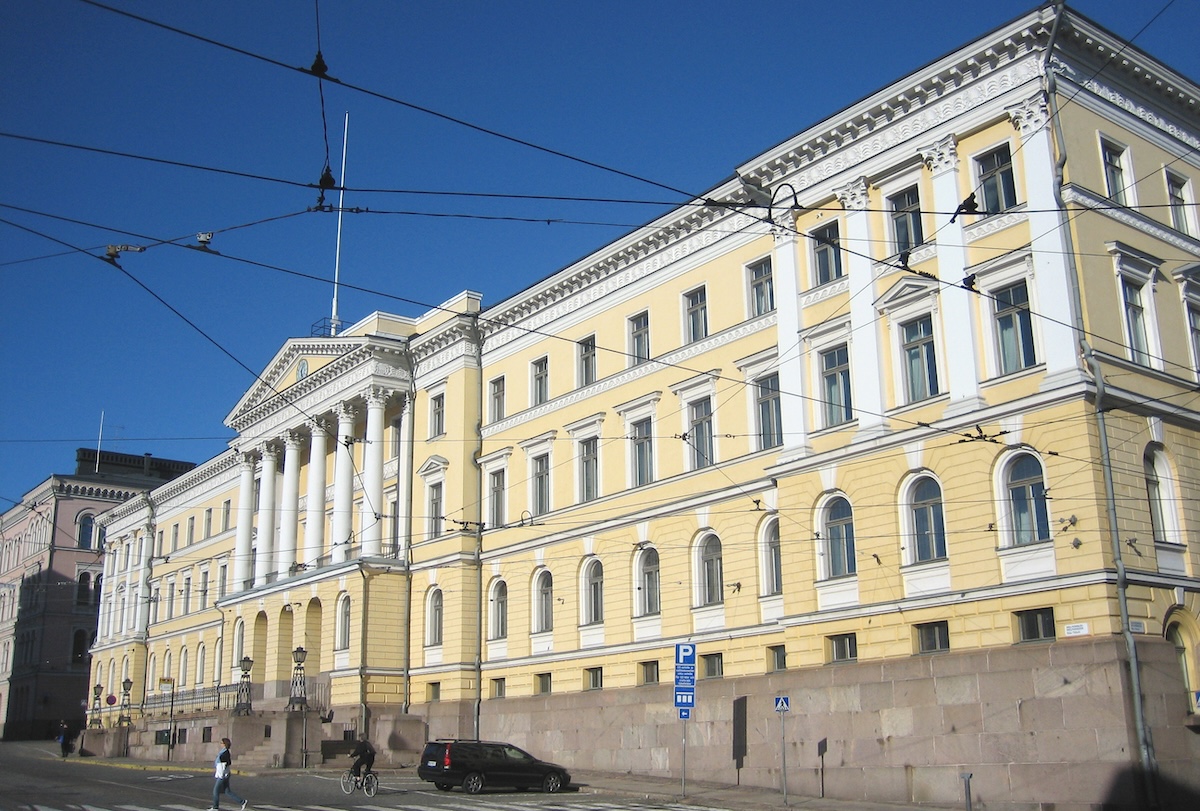
Photo Credit: Government Palace in Helsinki’s Senate Square. File photo by Lumijaguaari / Wikimedia Commons, public domain.
Finland has proposed raising the minimum retirement age to 70 years. The proposal comes from Finland’s Ministry of Finance (Valtiovarainministeriö) and has been listed in the set of officials’ recommendations for the next parliamentary term. Published on 7 October 2026, The proposal remains a recommendation from officials and requires political approval.
Gradual increases proposed from 2032
The recommendations are intended for the government taking office after the April 2027 parliamentary election, whose term would run until 2031, while the proposed retirement-age increases would begin in 2032. The suggested increase would begin in 2032, with the minimum old-age pension age rising by six months for each successive birth cohort until it reaches 70. This means 2032 would mark the start of the transition, rather than the year everyone becomes subject to a retirement age of 70. After reaching that threshold, the pension age would again be linked to life expectancy.
Rising debt drives pension reform proposal
Officials at Finland’s Ministry of Finance outlined the proposal in their recommendations for the 2027–2031 parliamentary term, published on 7 October. It forms part of a wider package aimed at halting rising public debt. Officials estimate that public finances need to be strengthened by €8–11 billion by the end of the next term through spending cuts, tax increases and structural reforms. Raising the retirement age could eventually increase employment by an estimated 50,000–120,000 people, according to the ministry.
Under Finland’s existing rules, the minimum old-age pension age is 65 for people born in 1962–1964, while for those born from 1965 it is linked to life expectancy. The proposal would accelerate this existing increase, bringing successive generations to a minimum pension age of 70 sooner than under the current system.
Concerns over jobs, health and fairness
Trade unions have questioned whether a higher pension age would deliver the employment gains forecast by the ministry. Speaking on Yle’s A-studio programme, Patrizio Laina, chief economist at the Central Organisation of Finnish Trade Unions (SAK), argued that young people already face difficulties entering the labour market. He challenged the ministry’s employment estimates and warned that the change could increase problems with older employees’ capacity to work. He also argued that a gradual increase would do little to address immediate fiscal pressures.
The proposal has also drawn political opposition. In comments reported by Yle, Social Democratic Party leader Antti Lindtman said that the accelerated increase would be particularly harsh on younger generations and could undermine confidence in the pension system. According to the SDP’s calculations, it could add almost four years to the retirement age of today’s 50-year-olds. Yle reported that the Centre Party favours tax incentives to encourage pensioners to continue working, while the governing National Coalition and Finns Party remain open to reform without committing to the proposal.
Jari Kannisto, development director at the Finnish Centre for Pensions, said in an interview with Yle that a retirement age of 70 was possible eventually, but described the proposed timetable as exceptionally tight. Research by the Finnish Institute for Health and Welfare, cited by Yle, found that more than half of people aged 65–74 considered themselves fully capable of working. However, physical capacity varies considerably even among people of the same age, raising questions about how evenly longer working lives could be achieved.
Nordic Comparison
Denmark provides the closest regional comparison, having already legislated a public pension age of 70 for people born in 1971 or later. Sweden uses a reference pension age of 67, while Norway and Iceland also have standard public pension ages of 67. However, all three permit earlier pension access under different conditions. These thresholds govern when people can claim pensions and should not be read as compulsory ages for leaving employment. Finland’s proposal would accelerate the rise in its minimum old-age pension age, while Denmark’s increase to 70 is already part of its legislated schedule.
| Country | Current standard or reference pension age | Important qualification |
| Finland | 64 years 9 months to 65 years, depending on birth year | |
| Denmark | 67 | Applies to people born from July 1955 through 1962. Legislated ages for younger cohorts are 68, 69 and 70 |
| Sweden | 67 years, the reference or “target” age | Income and premium pensions can generally be drawn from 64, subject to transitional rules. Guarantee pension eligibility begins at 67. |
| Iceland | 67 | Public old-age pension can be claimed from 65, with a reduced pension. |
| Norway | 67 | Pension can be drawn from 62 if sufficient pension rights have been accumulated, with lower monthly payments. |
Media coverage across the Nordic and Baltic region
The proposal has also attracted coverage elsewhere in the Nordic and Baltic region. In Sweden, Aftonbladet and Göteborgs-Posten carried a TT news-agency report, while News55 examined concerns about whether people in physically demanding occupations could work until 70. Latvia’s public media portal LSM placed the proposed increase within Finland’s wider plans to strengthen public finances.